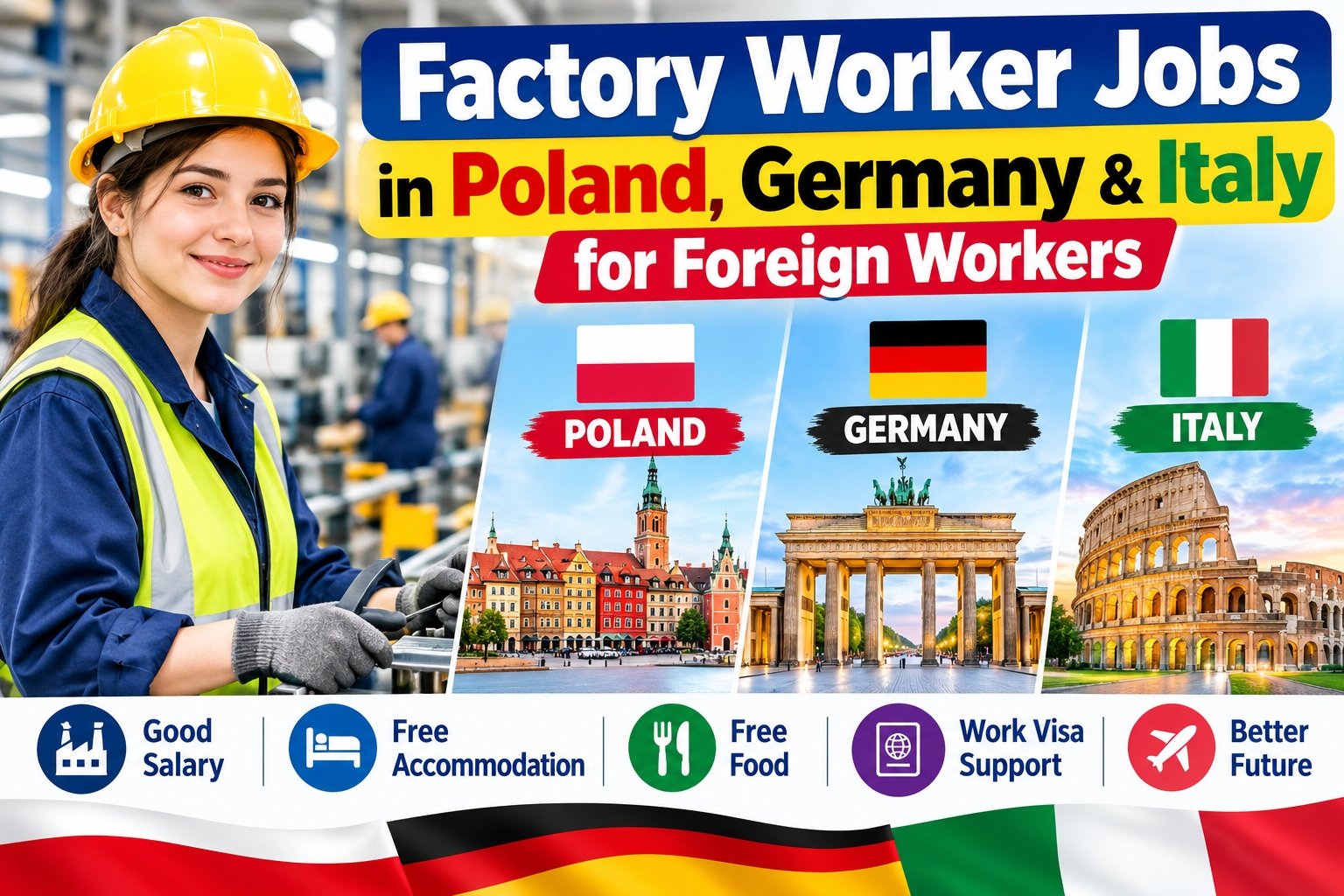
Factory worker jobs are an option for people looking for employment opportunities abroad. Poland, Germany, and Italy have manufacturing industries covering areas such as food production, packaging, automotive parts, warehouses, electronics, machinery, and general production.
For foreign workers, the exact requirements depend on the country, employer, job type, nationality, and immigration rules. Workers from outside the EU normally need the appropriate work authorization before starting employment.
Factory Worker Jobs in Poland
Poland has a large manufacturing sector, with opportunities in production, packaging, food processing, warehouses, assembly, and industrial factories.
Common factory positions include:
- Production worker
- Factory packer
- Machine operator
- Assembly worker
- Warehouse worker
- Food production worker
- Quality control assistant
- Manufacturing helper
Non-EU citizens generally need legal residence and the appropriate work authorization, such as an employer-obtained work permit or another permitted work arrangement.
Factory Worker Jobs in Germany
Germany has a major manufacturing industry, including automotive, machinery, electronics, food production, and industrial manufacturing.
Possible jobs include:
- Production operator
- Assembly worker
- Machine operator
- Packaging worker
- Warehouse assistant
- Food production worker
- Industrial helper
- Quality control worker
Foreign workers should check their eligibility before accepting a job. Germany generally requires third-country nationals to have the appropriate residence authorization for employment, and some positions may involve professional qualification requirements.
Factory Worker Jobs in Italy
Italy also has manufacturing opportunities in food processing, machinery, automotive components, textiles, packaging, and other industries.
Foreign workers may find positions such as:
- Factory assistant
- Production worker
- Packaging worker
- Machine operator
- Food factory worker
- Assembly worker
- Warehouse worker
- Textile worker
For non-EU workers, Italy generally requires work authorization and a visa before entry. Italy also operates an annual quota system for many non-EU employed workers. After entering Italy, the worker must apply for a residence permit within the required period.
Requirements for Foreign Factory Workers
Requirements depend on the employer and position, but commonly include:
- Valid passport
- Employment offer or contract
- Relevant work authorization
- Required visa or residence permit
- CV or work history
- Basic education or job-related skills
- Medical or other documents when required
- Language skills where requested by the employer
Some entry-level production jobs may provide on-the-job training, while machine operators and technical positions can require previous experience.
Salary and Working Conditions
Factory salaries vary significantly by country, employer, occupation, working hours, experience, and overtime. Workers should check the exact salary in the employment contract rather than relying on general online salary figures.
Before accepting an overseas factory job, check:
- Basic monthly salary
- Overtime pay
- Working hours
- Accommodation arrangements
- Transportation
- Health and social insurance
- Paid leave
- Contract duration
- Visa and work-permit responsibilities
How to Find Factory Jobs Abroad
Foreign workers can search for vacancies through official employment services, reputable job portals, company career pages, and government-supported employment resources.
When applying, prepare an updated CV that clearly lists your previous factory, production, warehouse, machine-operation, or packaging experience.
Never pay an unknown person for a guaranteed job or visa. Verify the employer, employment contract, and immigration requirements before making payments or sending personal documents.
Poland vs Germany vs Italy
Poland, Germany, and Italy all have manufacturing industries, but the employment and immigration rules are different.
Poland: Manufacturing and warehouse positions are available, but non-EU workers need to meet legal work and residence requirements.
Germany: Manufacturing is an important part of the economy, but foreign applicants should carefully check qualification, visa, and employment requirements.
Italy: Manufacturing jobs exist across several industries, while non-EU employment is subject to specific authorization and, for many workers, annual quotas.
Conclusion
Factory worker jobs in Poland, Germany, and Italy can provide overseas employment opportunities for foreign workers. Production, packaging, assembly, food processing, machine operation, and warehouse positions are among the job categories applicants may find.
Before applying, always confirm the employer, job contract, salary, work authorization, and visa requirements through reliable official sources. Immigration rules can change, so applicants should check the current requirements for their nationality and specific job.